Creating a harmonious outdoor space starts with measuring a few key factors before choosing a single plant or paving material. Sun exposure, soil type, available space and local water restrictions all determine which options are feasible. Comparing these constraints helps you prioritize decisions and avoid costly rework.
Soil, sun exposure and water: the three factors that shape every garden design
Most garden design guides start with style or furniture. But the first thing to consider is technical: soil type guides your choice of plants and materials. Clay soil retains water and cracks in summer, ruling out certain types of rigid paving. Sandy soil drains quickly but requires plants that can tolerate rapid drying.
Sun exposure plays a similar role. A south-facing wall gets several hours of direct sunlight a day in summer, heating wooden decks until they become uncomfortable to walk on barefoot. A north- or east-facing aspect, by contrast, stays cooler, limiting the choice of fruit trees but making it suitable for shaded seating areas.
Water requires particular attention. Drought orders may restrict or prohibit garden watering, even when the water comes from a rainwater collection tank. A rainwater tank does not automatically exempt you from restrictions, because the rules apply to how water is used, not where it comes from.
The VigiEau website lets you check the current rules in each municipality before designing a garden that depends on regular watering. This constraint encourages you to choose plants suited to the local climate and use hard landscaping or mulch to reduce water needs.
For more information on garden design on La P’tite Graine, several resources cover plant combinations suited to different soil types and sun exposures.
Patio materials and outdoor paving: comparing common options
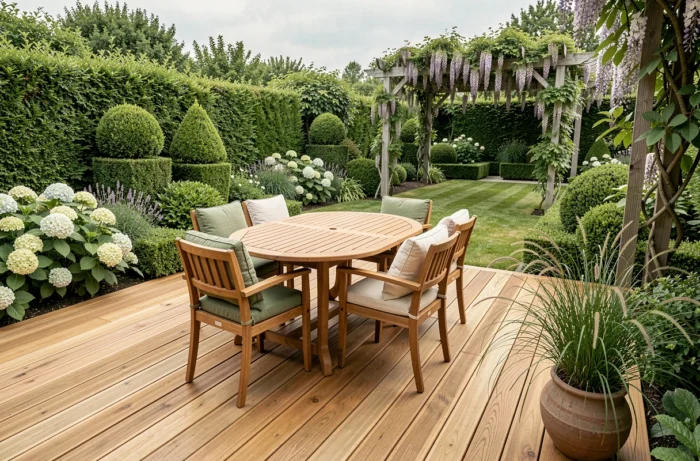
Your choice of paving has a major impact on your budget and future garden maintenance. The table below compares the main types of materials used in outdoor landscaping.
| Material | Weather resistance | Annual maintenance | Suitability for clay soil |
|---|---|---|---|
| Natural wood (treated pine, Douglas fir) | Moderate; sensitive to prolonged moisture | Apply wood cleaner or a protective oil once a year | Install on joists, raised off the ground |
| Composite (wood-polymer) | High; resistant to frost and UV rays | Clean with fresh water | Stable when installed on joists |
| Natural stone (granite, sandstone) | Very high | Low; treat moss in shaded areas | Lay on a stabilized sand bed; allow for clay shrinkage |
| Stabilized gravel | High; permeable | Rake and top up as needed | Good; helps prevent cracking |
| Concrete slabs | High | Low | Risk of cracking if the ground is unstable |
Wood remains the most popular material for garden patios, but it requires more annual maintenance than any other type of paving. Composite decking reduces the upkeep without sacrificing a warm, natural look. Natural stone is the most durable option, but costs more upfront and is heavy enough to require a solid base.
On clay soil, stabilized gravel is often the best compromise: it accommodates ground movement, drains rainwater and does not crack. A well-edged gravel path can define an outdoor space just as effectively as paving slabs.
Garden zoning: create distinct areas without wasting space
Dividing a garden into separate areas for dining, relaxing, playing and growing vegetables is a staple of garden design guides. The challenge lies in creating transitions between these areas. Poorly planned paths can take up a quarter of the usable space in a small garden.
Two principles can help reduce wasted space:
- Group areas that share the same practical needs. The vegetable garden and compost bin work well side by side, as do the dining patio and barbecue, reducing trips back and forth and the need for connecting paths.
- Use low-growing plant borders (lavender, rosemary, ornamental grasses) instead of walls or bulky screens to separate areas. They take up less ground space and help define the view without blocking it.
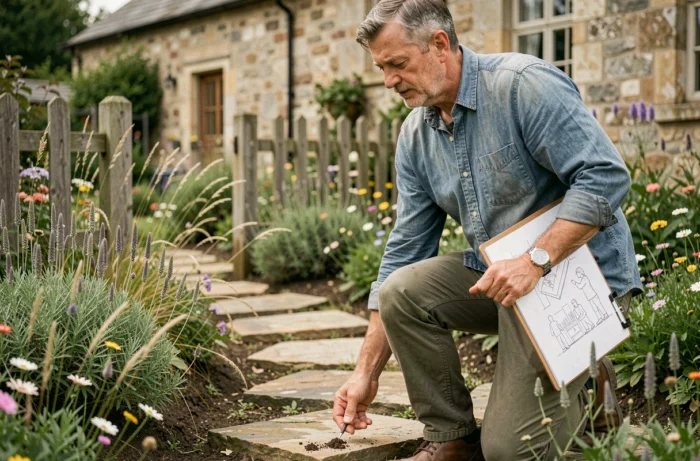
- Design paths to serve more than one purpose: stepping stones across a lawn provide a route and a decorative feature without adding another strip of hard landscaping.
Water management should also be part of the zoning plan from the outset. Directing gentle slopes towards a rain garden or soakaway prevents water from pooling on the patio after a storm and naturally waters plants further downhill.
Plants and outdoor lighting: two often-overlooked design elements
Choosing plants is about more than aesthetics. Choosing native species reduces watering and the need for treatments, while also supporting biodiversity. Perennials suited to the regional climate need less attention than imported annuals, and their roots help stabilize soil on slopes and along borders.
In coastal areas, one point deserves attention: collected rainwater may contain salt, which can harm sensitive plants. Le Parisien also notes that runoff from roofs containing lead or asbestos is unsuitable for watering. Choosing a rainwater collector is not enough: you still need to check where the water comes from and maintain the system.
Outdoor lighting can transform the way a garden looks and feels. Low path lights make a space appear longer. A spotlight set into the ground at the foot of a tree adds depth at night without causing glare. String lights above a patio create a visual ceiling that makes the dining area feel more intimate.
Solar lights are sufficient for marking out paths, but they are not bright enough for practical lighting. For a patio where you regularly dine, a low-voltage circuit connected to the home’s electrical panel provides steady, adjustable light.
Some municipalities offer financial assistance for installing rainwater collectors or adding greenery to gardens. Contacting your local council’s environmental services before starting the project could reduce the overall budget and help you choose eligible solutions from the design stage onward.