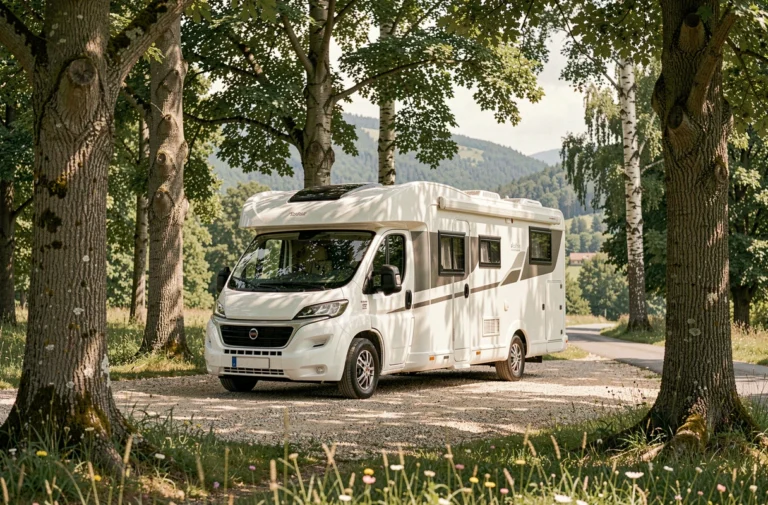
Choosing a mode of transport for a trip involves balancing four factors: distance, budget, acceptable travel time, and the logistical constraints of the route. Each factor carries different weight depending on the destination, and it is their combination—not an abstract preference for trains, planes, or cars—that guides the decision.
One ticket or separate tickets: an often-overlooked factor
Before comparing prices or journey times, it is worth asking one question: will the trip be covered by a single transport contract or by several separate tickets? This distinction can make all the difference if there is a delay or a missed connection.
A through ticket covering the entire journey generally comes with certain protections: rebooking on a later train, assistance from the carrier, and a single point of contact for complaints. Tickets purchased separately, even for the same itinerary, are covered by separate contracts. If the first train is delayed and you miss your connection, the second carrier is under no obligation to rebook you.
This pitfall also applies to journeys combining train and plane. A product sold as a combined journey may include rebooking, whereas two separate bookings leave travelers on their own if they miss a connection. Checking this before booking can help avoid unexpected costs and stress on departure day. The section on transport on Voyageurs Créateurs explains these distinctions across different itineraries.

Distance and journey time: when each mode of transport has the edge
How well a mode of transport performs depends directly on the distance traveled. On routes such as Paris–Lyon or Paris–Bordeaux, high-speed rail can rival flying in total travel time once you factor in check-in, security screening, and the transfer from the airport to the city center.
Short and medium-distance journeys in France
For journeys that take less than four or five hours by road, the train remains the most competitive option for door-to-door travel time. Stations are located in city centers, eliminating transfer time. A car has the advantage when the final destination is not served by rail or when the group is large enough to share the cost of fuel and tolls.
Long-distance journeys and destinations outside Europe
Beyond a certain distance, flying becomes the only realistic option in terms of travel time. For destinations outside Europe or on islands, there is no real choice. However, for European destinations reachable by overnight train (Spain, Italy, Germany), an overnight train saves you a night in a hotel and turns travel time into time to rest rather than time lost.
Transport budget: hidden costs that change the calculation
Comparing a train ticket with a plane ticket based solely on the advertised price can be misleading. Depending on the mode you choose, several additional expenses may apply.
- Flying often involves an airport-to-city-center transfer (shuttle, taxi, or rental car), an extra charge for cabin or checked baggage, and sometimes a hotel night for an early-morning flight
- Driving adds up fuel, tolls, parking at your destination, and vehicle wear and tear. For a solo traveler, it is almost always the most expensive option per kilometer
- Long-distance coaches offer the lowest fares, with tickets sometimes available for just a few euros, but journey times are considerably longer than by train or plane
- Carpooling splits fuel and toll costs among passengers, making it a competitive option for medium-distance journeys, with flexibility over pickup and drop-off points
The true cost of a journey includes all additional expenses, not just the ticket price. Adding up these costs before booking helps avoid unpleasant surprises.

Route accessibility: something to check before booking
Journey accessibility is not limited to the vehicle itself. An accessible train is of little use if the connecting station has no elevator or a ramp that is out of order. This matters to people with reduced mobility, families with strollers, and travelers carrying bulky luggage.
In France, the Assist’en Gare service allows eligible travelers to request assistance at the station. This assistance must be requested in advance, and arrangements vary by station and network. Checking that the service is available throughout the journey, including at connecting stations, is part of preparing for your trip.
The digital accessibility of booking platforms is another factor. Some comparison and booking websites do not yet meet accessibility standards, which can make it harder for some travelers to search for routes.
A quick decision guide based on your trip
Rather than relying on a universal ranking, choose your mode of transport by narrowing down the options based on your specific circumstances.
| Situation | Mode to consider | Main reason |
|---|---|---|
| Journey under 4 hours in France | Train | Door-to-door travel time and city-center stations |
| European destination reachable by overnight train | Overnight train | Saves a hotel night and reduces your carbon footprint |
| Destination outside Europe | Plane | The only realistic option in terms of travel time |
| Tight budget, flexible schedule | Coach or carpooling | Lowest fares on the market |
| Group of 3+ people, rural destination | Car | Shared costs and direct access to your accommodation |
The best mode of transport is the one that meets the trip’s main constraint: a tight budget, limited time, destination accessibility, or the number of travelers. No mode comes out on top across every criterion.
One final useful habit: always check whether the entire itinerary is covered by a single ticket or by separate contracts. Taking a few minutes to check when booking can save you hours of stress if something goes wrong along the way.