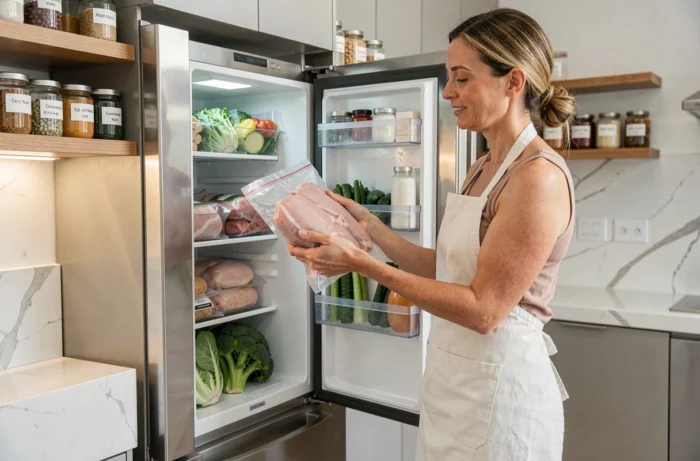
Vacuum sealing removes oxygen around food, but it does not sterilize it. Confusing vacuum packaging with commercially sterilized canned food is the most common mistake, even among experienced cooks. Vacuum storage times depend on the initial microbial load, storage temperature and type of product—not just the level of vacuum achieved by the machine.
Anaerobic risk and Clostridium botulinum in vacuum-sealed food
A vacuum-sealed bag creates an oxygen-free environment. This environment inhibits aerobic bacteria, but encourages the growth of Clostridium botulinum, an anaerobic bacterium whose spores are heat-resistant. Anses notes that heat sterilization is the only reliable way to destroy these spores.
Vacuum sealing alone, without sterilization, therefore does not protect against botulism. For cooked foods vacuum-sealed without commercial sterilization, strict refrigeration between 0 and 4 °C remains the main safeguard.
Other measures can provide additional protection: salting, smoking, drying and adding preservatives. Anses refers to the hurdle principle as a way to limit the growth of pathogens in refrigerated vacuum-packed products. A vacuum-sealed bag stored at room temperature without prior sterilization poses a real danger.
We recommend never extending the storage life of a vacuum-sealed prepared dish beyond the product’s original use-by date without specific microbiological validation.
Refrigerated vacuum storage: times by food category
The table below compares vacuum-sealed food storage times in the refrigerator (0 to 4 °C) with conventional storage times. These figures assume the product is fresh when vacuum-sealed and that the vacuum is maintained throughout storage.
| Food | Conventional storage | Vacuum-sealed storage |
|---|---|---|
| Beef (large cut) | 2 to 4 days | 8 to 10 days |
| Chicken / Turkey | 2 to 4 days | 6 to 9 days |
| Ground meat | 1 to 2 days | 4 to 5 days |
| Lean fish (cod) | 1 to 2 days | 7 to 8 days |
| Oily fish (salmon) | 1 to 2 days | 4 to 6 days |
| Shrimp / Shellfish | 1 to 2 days | 4 to 5 days |
| Sauced dishes | 2 to 3 days | 8 to 10 days |
| Cooked pasta / Rice | 2 to 3 days | 7 to 10 days |
Oily fish keeps for less time under vacuum than lean fish. Lipid oxidation, even in an oxygen-depleted environment, causes flesh rich in fatty acids to deteriorate more quickly.
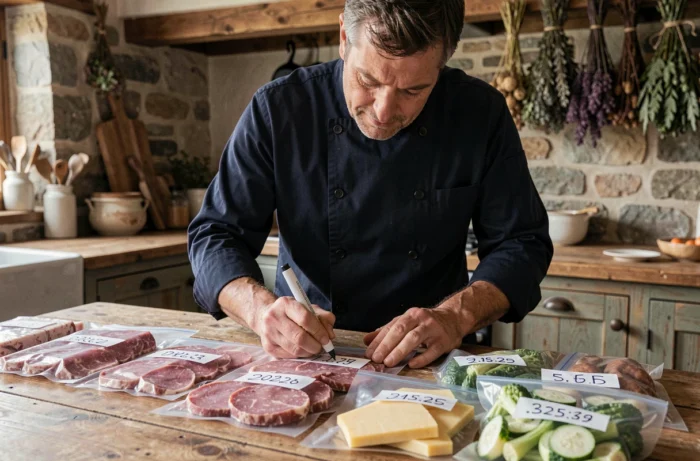
Vacuum storage in the freezer: real benefits for protein foods
Freezing at -18 °C combined with vacuum sealing extends storage times well beyond those in the refrigerator. The main benefit is protection against freezer burn: the vacuum-sealed bag prevents air from coming into contact with the food’s surface, preserving its texture and flavor.
- Meat (beef, pork, poultry): vacuum-sealed freezer storage lasts 15 to 20 months, compared with 6 to 12 months in conventional packaging
- Fish and shellfish: 10 to 12 months frozen under vacuum, compared with 3 to 6 months without vacuum sealing
- Blanched vegetables: vacuum freezing preserves quality for a period comparable to that of protein foods, provided the vegetables are blanched before bagging
Blanching vegetables before vacuum sealing is not optional. Without this step, fermentation can start even under vacuum, because plant enzymes remain active. An unblanched green bean sealed under vacuum will cause the bag to swell within a few days in the refrigerator.
Vacuum storage temperature: the factor that matters most
A two-degree difference in refrigerator temperature significantly changes the rate of bacterial growth. Between 0 and 2 °C, microbial growth is greatly slowed. Between 4 and 7 °C, the storage times shown in the tables are no longer reliable.
Anses stresses the importance of maintaining the cold chain for prepared dishes and vacuum-packed meat products. Refrigerator temperature should be checked with a thermometer, not estimated from the thermostat setting.
Storing vacuum-sealed food at 7 °C halves its storage life compared with storage at 2 °C. This is often overlooked in guides that list storage times without specifying the exact temperature range.
Chamber vacuum sealer or external suction sealer
The level of vacuum achieved affects storage life. Professional chamber vacuum sealers achieve a stronger vacuum (around 99%) than domestic external suction sealers. For liquids and sauced dishes, a chamber vacuum sealer is the only viable option: an external suction sealer draws the liquid out before sealing the bag.
The type of bag matters too. Embossed bags, designed for external suction sealers, have microchannels that make it easier to remove air. Smooth bags for chamber vacuum sealers provide a more uniform barrier, with fewer weak points along the seal.
Foods not to vacuum-seal without taking precautions
Some products present specific challenges when vacuum-sealed:
- Soft cheeses continue to ripen under vacuum, which can alter their texture and flavor in ways that are sometimes undesirable
- Raw mushrooms, which are delicate and porous, become compressed by the vacuum and may develop mold if they are not completely dry
- Unblanched cruciferous vegetables (broccoli, cauliflower) release gases that cause the bag to swell within a few days
For foods with a high water or gas content, blanching or cooking beforehand is still the best approach before bagging.
Vacuum sealing extends the shelf life of food, but only when the cold chain is properly maintained and the product is safe to begin with. Food that is already contaminated before vacuum sealing will not keep any better in a bag, regardless of the level of vacuum achieved.