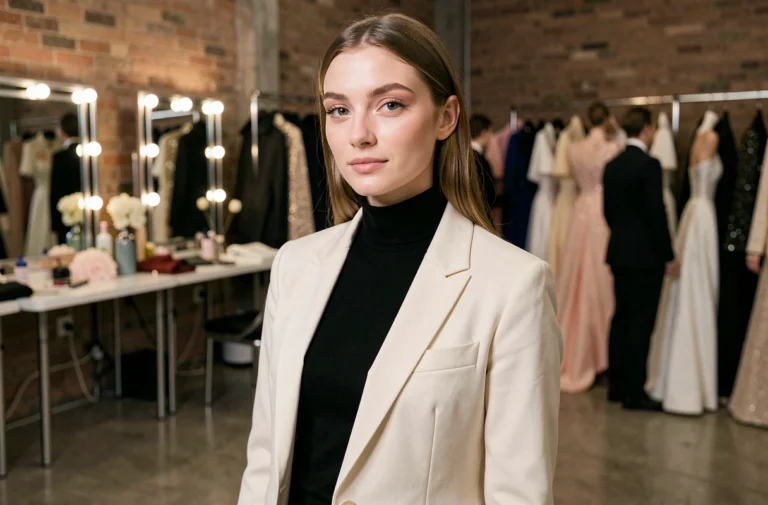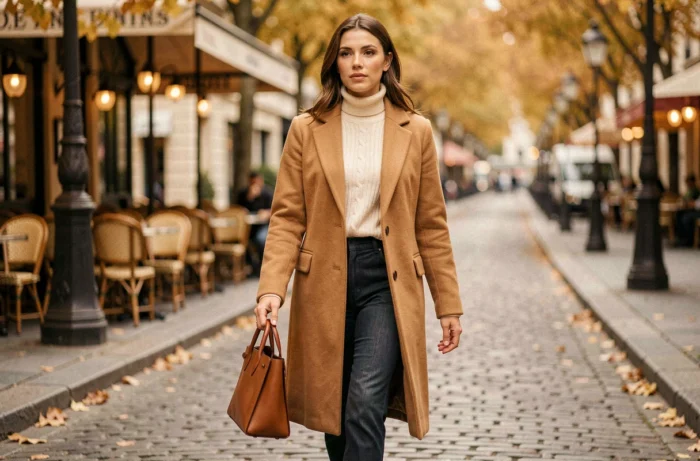
A fashion trend refers to a stylistic movement adopted simultaneously by designers, retailers, and the public over one or more seasons. This movement is reflected in the choices of cuts, materials, colors, and volumes presented during fashion shows, then adapted in commercial collections. This season, three axes structure wardrobes: the return of architectural silhouettes, a palette oscillating between warm tones and saturated shades, and an increased durability of pieces.
Structured cuts and rethought volumes: the silhouette of the season
Volume is no longer worn the same way. Defined shoulders, cinched waists, and flared skirts are gradually replacing the oversized silhouettes that dominated recent years. This change reflects a return to more defined lines, where each piece shapes the body instead of masking it.
The shouldered blazer is the central piece of this trend. Worn closed over straight trousers or open over a flowing dress, it creates a contrast between rigor and lightness. The materials are as important as the cut: dense wools for autumn-winter and structured cotton fabrics for mid-season give the blazer a structure that justifies the investment.
Midi skirts with knife pleats and wide pleated trousers complete this architectural line. The idea is not to revert to the strict codes of tailoring but to combine structured pieces with softer elements to create a visual balance. A pair of pleated trousers paired with a fine knit sweater, for example, works equally well in the office as in a casual setting.
To explore fashion trends on Eva Mode, the selection of structured pieces provides a good overview of these rethought silhouettes that mark the season.
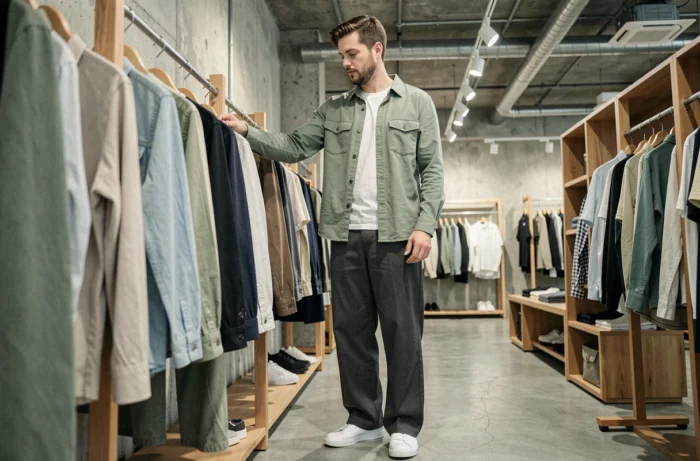
Autumn-winter color palette: from butter to burgundy
The colors of the season are divided into two distinct families. On one side, warm and soft tones; on the other, deep and saturated shades. This is no coincidence: recent fashion shows have massively presented these two registers, often within the same collection.
Butter yellow and caramel: the warm tones that persist
The butter yellow continues its progression that began in previous seasons. This shade works because it adapts to almost all types of pieces: a satin dress, a wool coat, a leather bag. Its strength lies in its ability to warm up a look without weighing it down.
Caramel and cognac accompany this hue. When combined in the same look (caramel trousers, butter sweater, cognac belt), they create a harmonious tone-on-tone effect that avoids monotony through variations in material.
Burgundy and midnight blue: the deep shades of winter
Burgundy establishes itself as the alternative to black for formal outfits. Warmer and less austere, it dresses both a long dress and a leather jacket. Midnight blue plays a similar role: it adds depth without the severity of classic navy.
Mixing a warm tone with a deep shade in the same outfit produces a more interesting result than a total monochrome look. A burgundy blazer over butter trousers, for example, creates a controlled contrast that works both day and night.
Sustainable pieces and textile regulation: what is changing concretely
Choosing clothes based on trends does not exempt one from considering their lifespan. And on this point, the European regulatory framework is starting to impact the available offerings in stores.
Recently, large textile companies are no longer allowed to destroy their unsold items in the European Union. Reuse, donation, or resale are the preferred options. Recycling an unsold item does not necessarily comply with this prohibition, which pushes brands to design pieces intended to last, be repaired, or resold.
Medium-sized companies will be affected starting in 2030, while small and micro-enterprises remain exempt. Targeted companies must also publicly report on unsold products they dispose of, along with the reasons and methods used.
For consumers, this evolution translates into concrete changes in collections:
- More durable and repairable materials, prioritized from the design stage to extend the garment’s lifespan
- Reinforced finishes (double stitching, spare buttons provided) that facilitate long-term maintenance
- Development of take-back and second-hand services directly offered by brands
This regulatory context provides an additional argument for investing in well-cut pieces rather than making impulsive purchases. A structured blazer made of quality wool will last through several seasons, whereas a low-quality piece will lose its shape after a few washes.
Building seasonal looks with few pieces
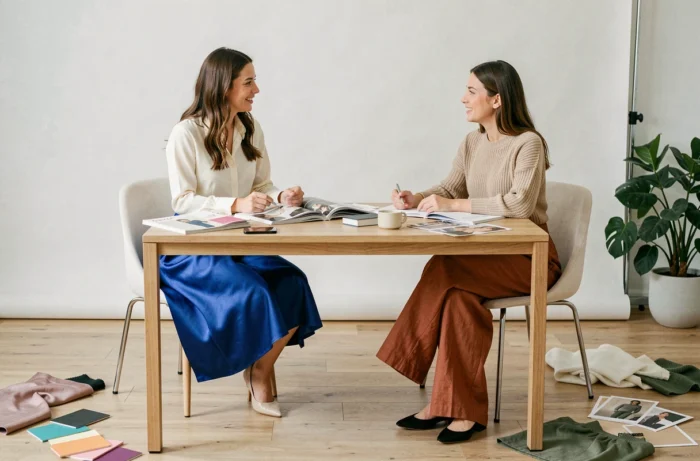
The underlying trend, beyond colors and cuts, remains the capsule wardrobe: a limited number of versatile pieces that can be combined with one another. The principle is not new, but it takes on a concrete dimension when intersected with current trends.
Five categories of pieces are enough to cover the majority of situations for the season:
- A structured blazer in a neutral tone (beige, gray, navy) that works in layering or on its own
- A pair of pleated trousers in a sufficiently dense material for autumn, also wearable in spring
- A quality knit (crew neck or V-neck sweater) in a warm tone like butter or caramel
- A piece in a deep color (burgundy dress, midnight blue skirt) for more formal occasions
- A mid-length coat that covers the blazer without overwhelming the silhouette
The exercise consists of checking that each piece can be combined with at least three others before purchasing it. This filter eliminates isolated impulse buys that end up cluttering the wardrobe without ever being worn.
The trends of this season actually facilitate this approach: structured cuts naturally pair with one another, and the butter-caramel-burgundy palette forms a cohesive set without the need for effortful coordination. Focusing on quality craftsmanship rather than quantity remains, season after season, the most profitable choice for a lasting style.