
An adventure journal inspires you to set off, but it rarely shows what happens before departure: searching for accommodation just days before a trip, figuring out how to take a bike on a crowded regional train, or sorting through ten suggestions generated by artificial intelligence.
Tourism in France is increasingly focused on the value of trips rather than the number of arrivals. Understanding what goes on behind the scenes, between logistical constraints and inspiration, changes the way you plan future trips.
Last-minute bookings, taking bikes on trains and AI: three rarely documented factors
Travel journals publish itineraries, photos and tips about places. They often leave out the practical hurdles that determine whether a trip is feasible. These three factors are worth considering together to understand their impact on trip planning.
| Factor | Current trend | Impact on travellers |
|---|---|---|
| Last-minute bookings | Long-term trend towards booking closer and closer to departure | Less availability, fluctuating prices, and a need for flexibility on dates and destinations |
| Taking bikes on trains | New restrictions on bringing bikes on board are planned in France | Need to check the rules for each route, with the risk of being refused boarding |
| AI tools for trip planning | Growing adoption among travellers, but uneven uptake among tourism professionals | Plenty of suggestions, but not always reliable; local sources need to be cross-checked |
This table does not claim to cover every constraint. It focuses on the ones adventure blogs most often overlook, even though they shape what a trip looks like in practice.
For example, when planning a stay in Alsace, cross-checking suggestions from an AI tool with the Alsace Unpacked guide can help you check whether an itinerary or stop is suitable before booking.
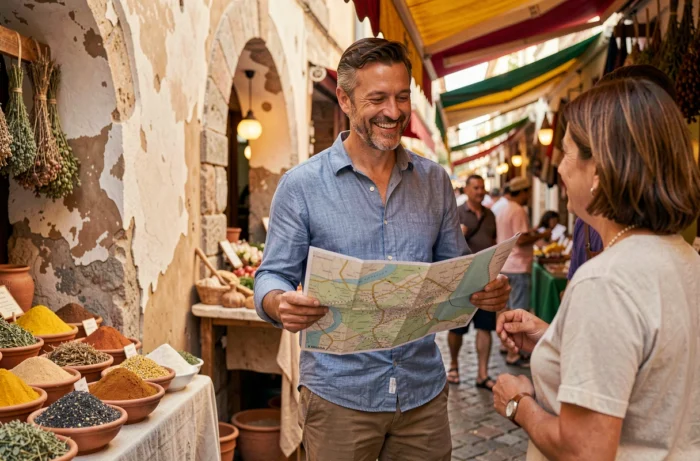
Last-minute bookings: how the trend is changing travel in France
Booking late is no longer unusual. Tourism professionals describe it as a lasting trend that requires them to adapt their visibility and offers constantly. For travellers, the consequences are immediate.
Availability and prices during peak season
Booking a week before departure in high season means accepting fewer options. The best-located or highest-rated accommodation has been booked for weeks. The average price of the remaining accommodation rises automatically as availability dwindles.
One solution is to focus on less crowded destinations. French regions outside the most heavily promoted routes (Alsace outside the Christmas markets, the Basque hinterland, the Massif Central) often still have reasonable availability, even at short notice.
Be flexible with dates rather than your budget
Moving your departure by two or three days can sometimes bring lower prices and a wider choice of accommodation. Adventure journals present fixed itineraries with set dates. In practice, flexibility with dates is the most effective way to make a successful last-minute trip.
- Check availability across several consecutive days before setting your departure date, rather than searching only for your intended weekend
- Choose accommodation with free cancellation to leave yourself room to manoeuvre if a better slot becomes available
- Check with local tourist offices, which often have a real-time view of availability that centralised platforms do not reflect
Travelling by bike and train: plan ahead for new restrictions
Cycling has become a way to travel in its own right, and many adventure journals document cycling routes in France. Taking a bike on the train, however, remains a blind spot.
Rules vary by route and region
The rules for bringing an assembled bike on board differ between TGV, TER and Intercités trains. On some regional routes, bikes are allowed without a reservation, but there is no guarantee of space during peak hours. On others, a reservation is required and the number of spaces is limited.
New restrictions on taking bikes on trains are planned in France. This makes it essential to check the rules for each route before planning a trip that combines train and bike travel.
Plan a bike-and-train trip without any nasty surprises
An adventure journal describing a cycling route between two cities may not mention whether the train journey in between allows assembled bikes. Checking this before planning the leg helps avoid being refused boarding and having to reorganise everything at the last minute.
- Check the rail operator’s website for each planned leg, distinguishing between TGV, TER and Intercités trains
- Find out whether the route requires a bike reservation or allows boarding on a first-come, first-served basis
- Bring a transport bag that meets the dimensions for standard luggage in case assembled bikes are restricted
- Identify an alternative route that can be completed entirely by bike if the train does not accept bikes on the day of departure

Artificial intelligence and trip planning: a gap between promise and reliability
Generative AI tools can produce itineraries, restaurant lists and activity suggestions in seconds. Their use among travellers is growing. Tourism professionals, however, have adopted them unevenly, creating a gap between automated recommendations and what is actually happening on the ground.
What AI gets right—and what it misses
A language model is good at structuring a schedule, suggesting logical connections between stops and summarising reviews. It struggles, however, with very local or recent information: changed opening hours, trails closed for maintenance, or cancelled events.
AI suggestions should be cross-checked against up-to-date local sources. A tourist office, a specialist regional guide or a recent traveller forum can provide the corrections the algorithm cannot make on its own.
Use AI as a starting point, not as your final itinerary
Asking an AI tool to generate a five-day itinerary in Brittany or the Vosges gives you a starting point. Verifying the details often takes as much time as generating the initial plan. Cross-checking each suggestion against a specialist source (a regional guide, an on-the-ground blog or an official website) turns an automated draft into a reliable itinerary.
This validation process is rarely visible in adventure journals. The published result looks seamless. The planning itself involves going back and forth between several sources, making last-minute adjustments and deciding what matters most.
Adventure journals and real-world constraints: documenting what makes a trip possible
Travel journals serve a specific purpose: to inspire, show a route, and share photos and impressions. Their limitation is that they almost never document the mechanics of planning.
A successful trip in France depends as much on the quality of the inspiration as on managing practical considerations. The lasting trend towards last-minute bookings, growing restrictions on taking bikes on trains, and the arrival of AI tools in trip planning are changing the way people prepare to set off.
An adventure journal that accounts for these constraints becomes a planning tool, not just a showcase. Documenting the hurdles also helps those who read the story before setting off on their own trip.