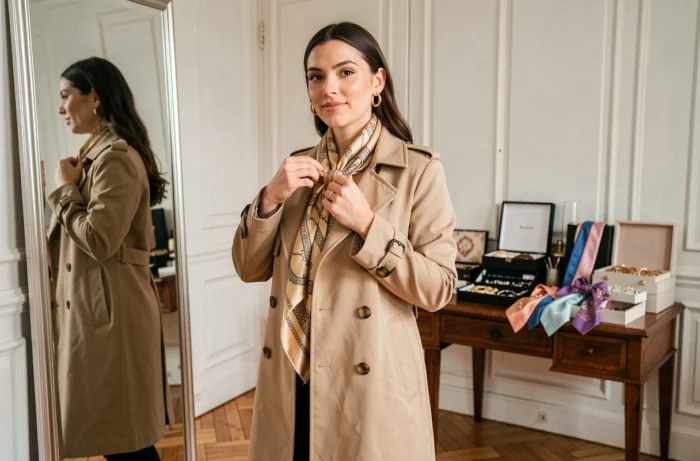
A fashion accessory serves a specific purpose in an outfit: it changes the perceived proportions of the silhouette, draws the eye to a particular area of the body, or introduces a contrast in color or texture. Choosing on-trend accessories to elevate everyday looks comes down to a few practical principles that go beyond personal taste.
Proportion and focal points: the visual mechanics of an accessory
Before style or trends come into play, an accessory affects how the body is visually perceived. A belt worn at the waist creates a horizontal line that divides the silhouette into two sections. A long pendant necklace elongates the torso. Oversized earrings make the face appear wider.
This principle of the focal point determines everything else. Each added piece draws attention to the area where it sits. Wearing a statement necklace and large earrings at the same time splits the viewer’s attention between two nearby areas, making the overall look feel less cohesive.
The practical rule can be summed up in one sentence: one main focal point per outfit. If the necklace is bold, keep the earrings understated. If the belt is the standout piece, opt for a simple bag. This isn’t about minimalism; it’s about visual hierarchy. You can easily see this principle at work among Fashion Boobies accessories: each category features pieces designed to serve as the single accent in a look.
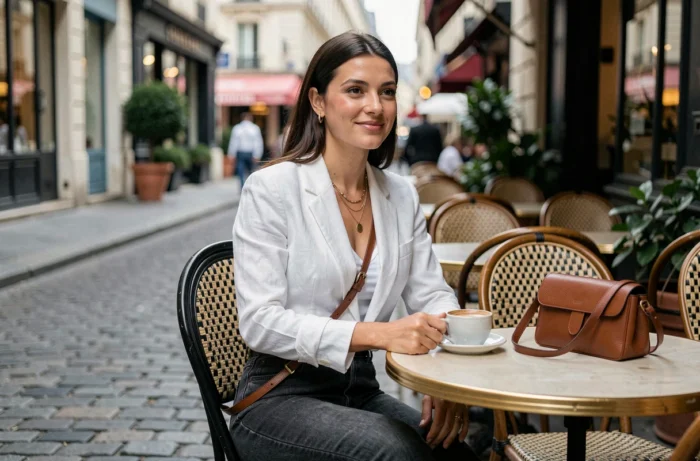
Choose jewelry to suit your coloring and the fabric of your clothes
Pairing jewelry with clothing involves more than simply matching colors. Your skin undertone (warm or cool) can guide your choice of metal. Warm undertones (greenish veins on the wrist) pair well with yellow gold, brass, and copper. Cool undertones (bluish veins) look brighter with silver, white gold, and steel.
The fabric matters just as much. A chunky resin or wooden piece works well with matte fabrics such as linen or heavyweight cotton. With a silk or satin blouse, a fine, polished metal catches the light without weighing down the texture.
Three practical criteria for choosing everyday jewelry
- Actual weight against the skin: an earring that’s too heavy pulls on the earlobe and becomes uncomfortable after a few hours, limiting how often you can wear it
- Clasp type: a push-back earring can easily fall off, while a lever-back clasp stays secure over time and withstands repeated movement
- How it reacts to water and perspiration: inexpensive alloys tarnish quickly, while stainless steel or good-quality gold plating retains its appearance for several seasons
Bags and belts: shaping your everyday silhouette
A bag is more than just a container. Its size and where it falls can change the way your silhouette looks. A short crossbody bag that ends at the waist defines the waistline. A tote worn over the shoulder elongates the torso but can make the hips look wider if the bag is bulky.
For everyday use, the size of your bag should match what you actually carry. A bag that’s too large for its contents can lose its shape and structure. An undersized bag that’s overstuffed gapes open and wears out prematurely at the seams.
A belt has a different effect depending on whether you wear it at your natural waist, on your hips, or over a loose-fitting garment. On a flowing dress, a slim belt in soft leather creates a break in volume without making the silhouette look stiff. On high-waisted jeans, a wide belt defines the hips and makes the torso appear shorter.

Choose a bag to suit the occasion
A simple office outfit (straight-leg trousers, a plain shirt) pairs well with a structured pebbled-leather bag, which adds definition to the look. A casual jeans-and-T-shirt outfit gains character with a canvas or suede bag—materials that complement cotton.
The most common pitfall is mixing metal finishes. If your belt buckle is gold and your bag clasp is silver, the eye picks up on the mismatch, even subconsciously. Matching the metal finishes across your accessories creates a polished look with no extra effort.
Trendy accessories and sustainability: an increasingly important factor in choosing what to buy
Since July 19, 2026, large companies have no longer been allowed to destroy unsold clothing, clothing accessories, and shoes in Europe, subject to defined exceptions. This regulatory change is reshaping the fashion accessory value chain and making it even more worthwhile to choose pieces designed to last.
In France, Refashion’s Repair Bonus helps cover repairs carried out by certified professionals, including shoe resoling. Before replacing a worn accessory, check whether the repair is covered—it could extend its life by several seasons.
- Check the stitching and bonding before buying: saddle stitching (two needles, one thread) on a leather bag is far more durable than simple heat bonding
- Choose materials that develop a patina rather than deteriorate: full-grain leather, solid brass, and waxed cotton canvas age beautifully and gain character over time
- Keep any spare parts provided (buttons, clasps, tips): they make quick repairs possible without having to replace the whole item
Choosing a trendy accessory isn’t just about following seasonal collections. A well-cared-for silk scarf, a resoled leather bag, or a pair of stainless-steel earrings can complement dozens of outfits for years. An accessory’s longevity determines its value as a style investment far more than its initial purchase price.