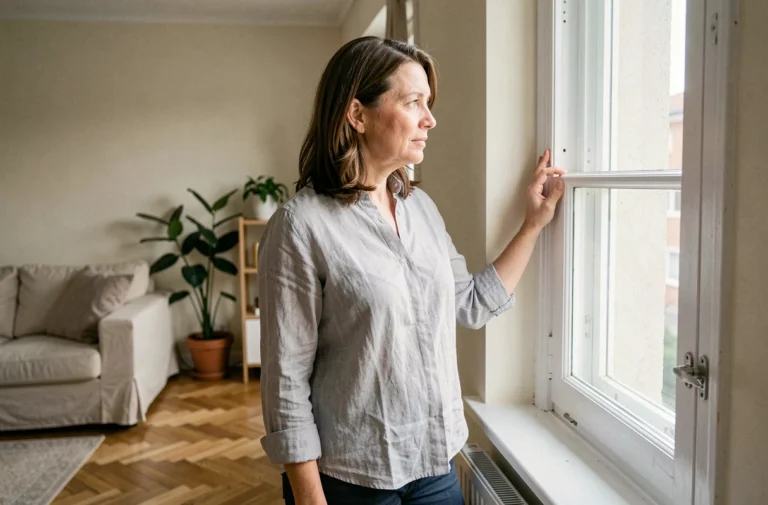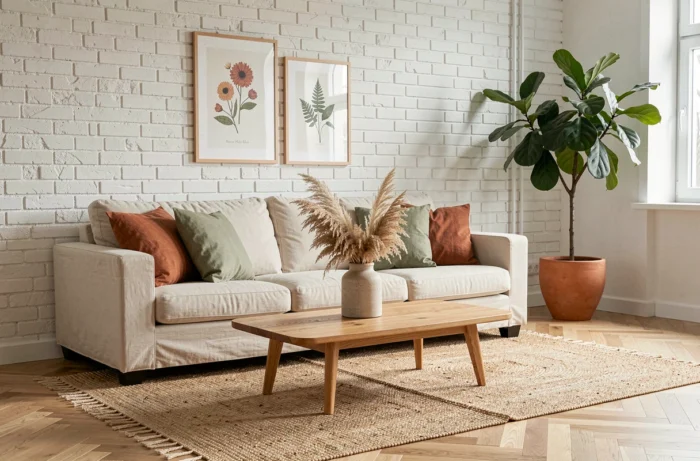
Decorating a home you don’t own comes with practical constraints: you may not be allowed to drill into certain walls, repainting may require the landlord’s approval, and budgets are often tight.
Since January 1, 2025, properties rated G have no longer been considered decent housing for new leases in mainland France, reshaping the boundary between decorative changes and structural work. Creating an interior that feels like you within these constraints takes careful choices, not just inspiration.
Decorating a rental: what you can change without permission
Residential leases distinguish between reversible improvements and alterations. Hanging lightweight shelves, putting up wall textiles with adhesive systems, changing door handles, or installing a light fixture using an existing outlet are all considered ordinary improvements. Tenants can make these changes without requesting written permission.
Changes that affect the structure, plumbing, or electrical system, however, require the landlord’s approval. Repainting a wall in a bold color falls into a gray area: if the color is considered “normal,” the landlord cannot prohibit it, but painting all four walls a dark red could cause problems when you move out.
For tenants who want to personalize their space, the most reliable strategy is to invest in movable, reversible pieces: textiles, furniture, floor lamps, and mirrors that lean against the wall. These choices can completely transform the feel of a room without putting your security deposit at risk.
Resources such as the Tip Top Déco et Maison website bring together ideas organized by room, making it easier to picture the possibilities before buying anything.
Fast decor and reuse: two consumer trends reshaping interiors
A November 1, 2026 article in La Dépêche describes the rise of “fast decor”: frequently refreshed collections at low prices, as consumers shift toward cheaper products. The trend is similar to fast fashion, but for the home. Items bought this way often look dated within a few months.
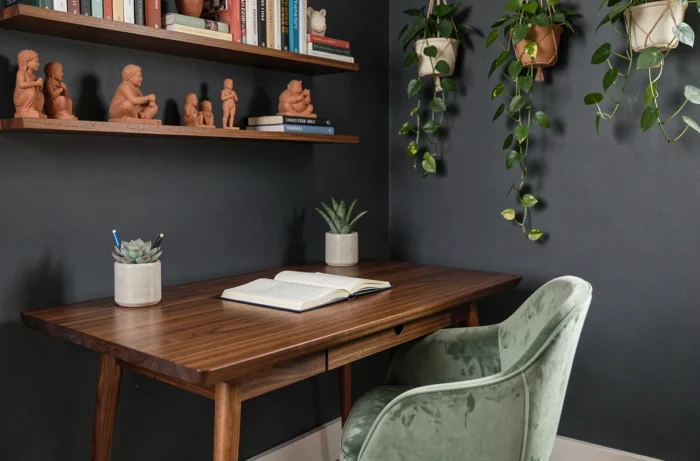
By contrast, reuse is gaining ground. According to Ecomaison’s 2024 report, as cited by Profession Recycleur, more than 65,000 tonnes of products were reused after collection. Finding a vintage piece, taking a donated chest of drawers, or having a 1970s sideboard refinished can help create an interior unlike anyone else’s.
The distinction between these two approaches is useful for anyone looking to create a personal interior. A few durable pieces, chosen for their material and shape, establish a room’s style. Less expensive accessories—cushions, candles, and small decorative objects—can be swapped out without disrupting the overall look.
How to tell a durable purchase from a disposable one
- Material: solid wood or metal furniture can be repaired, sanded, and repainted. Melamine-coated particleboard furniture does not hold up well to a second move
- Timeless design: a sofa with simple lines stands the test of time, while an armchair strongly associated with a trend (oversized woven rattan, pink corduroy) may soon feel dated
- Cost per year of use: an item costing 200 euros and kept for ten years costs less than a 40-euro item replaced every two years
Color and atmosphere: start with the light you have, not a Pinterest photo
Most decorating guides start by asking you to choose a style. The problem is that the natural light in a home affects how every color looks. A beautiful sage green on Instagram can turn into a dull gray in a north-facing room with just one window.
Before choosing a color palette, observe the light in each room at three times of day: morning, midday, and late afternoon. A bright room can handle rich shades (deep blue, terracotta). A dark room is better suited to light, warm tones, with color concentrated in textiles rather than on the walls.
For tenants who cannot repaint, there are alternatives: removable wallpaper, large framed prints, or fabric panels stretched over frames. These add color to a wall without affecting the original finish.
Furniture and layout in a small space
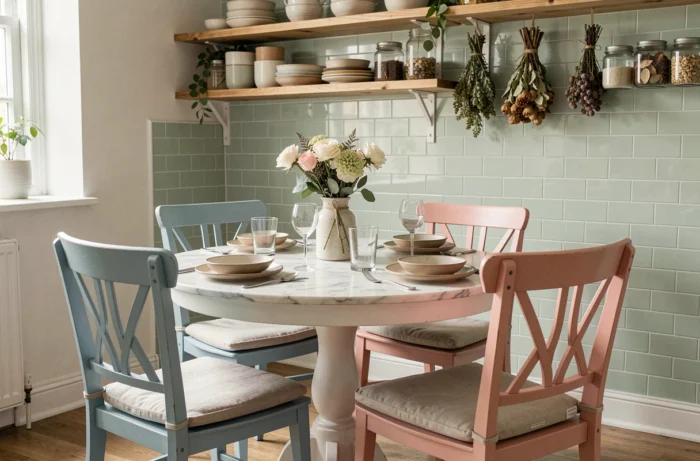
In urban homes, space is the main constraint. Start by placing the largest piece of furniture—usually the sofa or bed—and arrange everything else around it. This creates a more cohesive result than accumulating purchases over time.
Every piece of furniture should serve at least two purposes in a small space: an entryway bench with built-in storage, a coffee table that opens into a storage chest, or a wall-mounted fold-down desk. This principle prevents clutter while preserving everyday comfort.
Energy ratings and decorating plans: a check that’s often overlooked
When tenants are considering major changes to their home, it is worth checking the property’s energy rating. Since 2025, properties rated G have been progressively excluded from the standard rental market, with F and then E ratings set to follow according to the legal timetable.
One technical detail can change the picture: the electricity conversion factor was reduced to 1.9 on January 1, 2026, according to the Rentmax guide updated on November 14, 2026. As a result, some electrically heated homes may no longer fall into the F or G categories without any work being done. Before investing in a new heating system or decorative insulation (thermal curtains, thick rugs), check the date and rating of the property’s DPE to avoid unnecessary expenses.
This information does not directly affect your choice of cushion or lamp. It does matter, however, when considering a room’s thermal comfort, which is an integral part of feeling at ease in your home.
An interior that feels like you isn’t created with one bulk order. It takes shape through a series of reversible choices, tested in the home’s actual light, and pieces that last longer than a trend. The best decorating investment is one you won’t need to replace after two years.